
Red Imported Fire Ants (RIFA) are a highly invasive, non-native species to Bermuda. They were first reported at a private residence in Hamilton Parish in November 2025. A second colony was discovered on the cargo dock in the City of Hamilton a month later. Both colonies were promptly treated with approved insecticides, however the Department of Environment and Natural Resources is concerned that unreported fire ant colonies exist on Bermuda and eradication can only occur if they are destroyed before they can spread to other locations.
English
Philippine
Negative Impacts
Fire ants have the potential to cause social, economic, and environmental harm. They can disrupt everyday activities such as picnics, outdoor play, and sporting activities because backyards, parks, playgrounds, and sports fields become unusable. People involved in farming, gardening and landscaping can also be affected.
Here are some additional examples of what fire ants can do:
- negatively affect our tourism industries, making some popular destinations unattractive
- damage electrical equipment like air conditioners and meter boxes
- downgrade the quality of some produce (e.g. potatoes and corn)
- attack young animals and livestock
- feed on native wildlife that nest or live on the ground
Appearance of ants and ant mounds
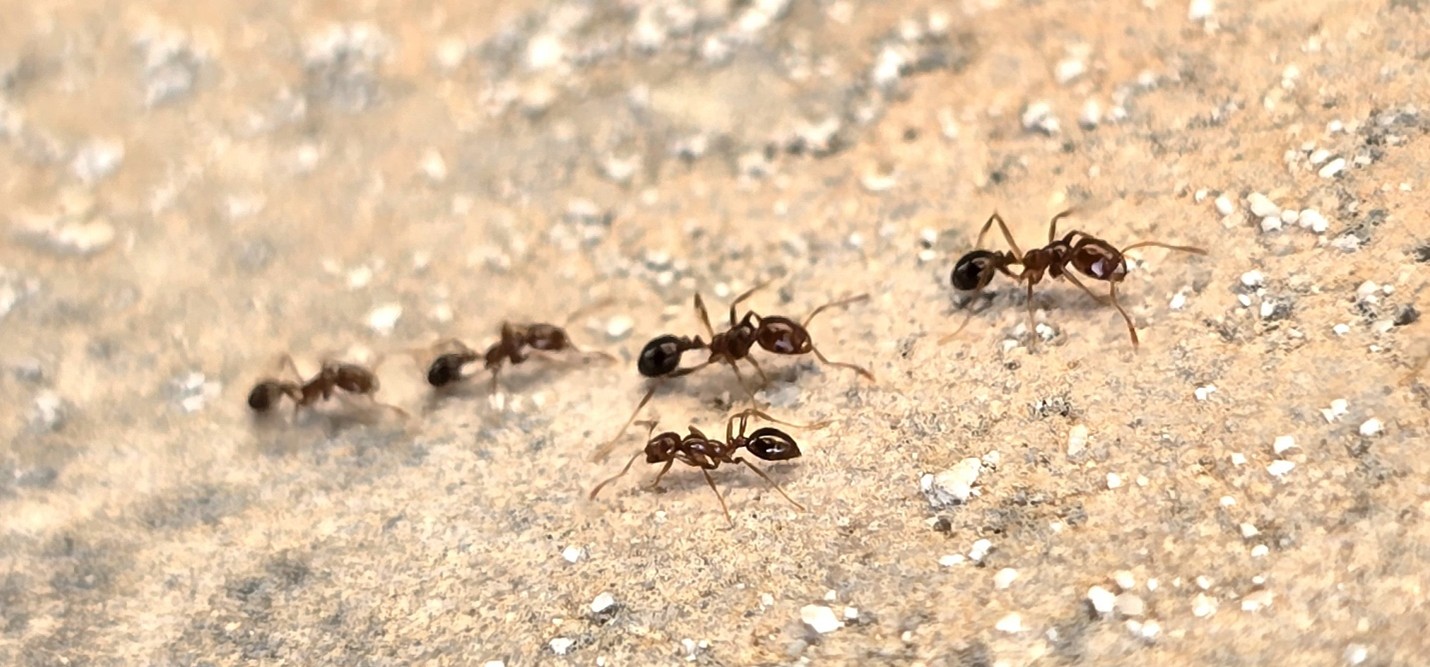
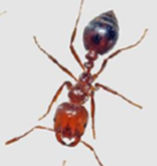
Red imported fire ants are up to 6 mm long with a reddish-brown head and thorax and a dark abdomen. Different sized individuals can be found in a single colony, but the largest workers are the ones who actively forage and defend the nest.
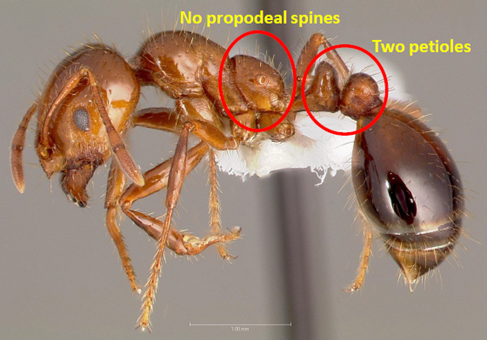
They do not have any spines on their bodies (other than the stinger at the end of their abdomen) and possess two petioles (bumps) which can be seen between the thorax and abdomen.
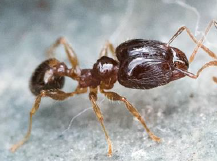
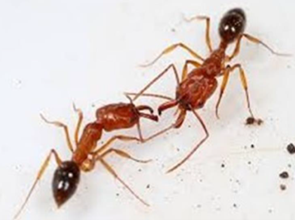
It is easy to confuse fire ants with other locally established ant species, especially the big-headed ant (Pheidole megacephala) and the trap-jaw ant (Odontomachus ruginodis). Big-headed ants are widespread across Bermuda, and the major workers have heads noticeably larger than their abdomens. This is not the case with fire ants whose heads are about the same size as their abdomens. Trap-jaw ants are twice the size of fire ants and have much longer jaws.

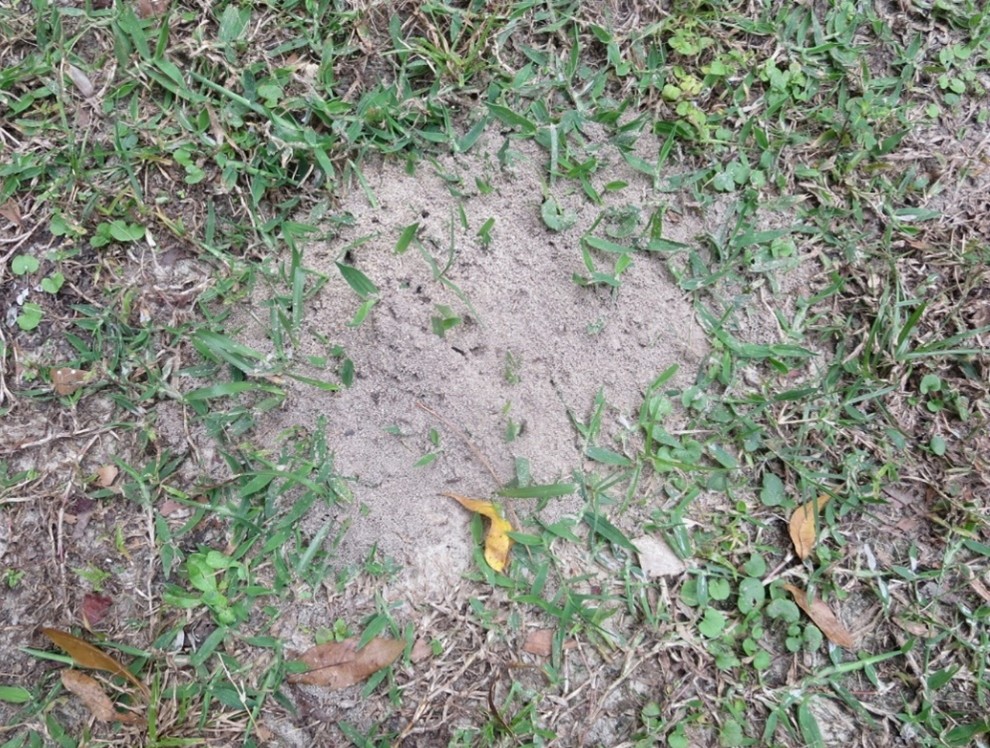
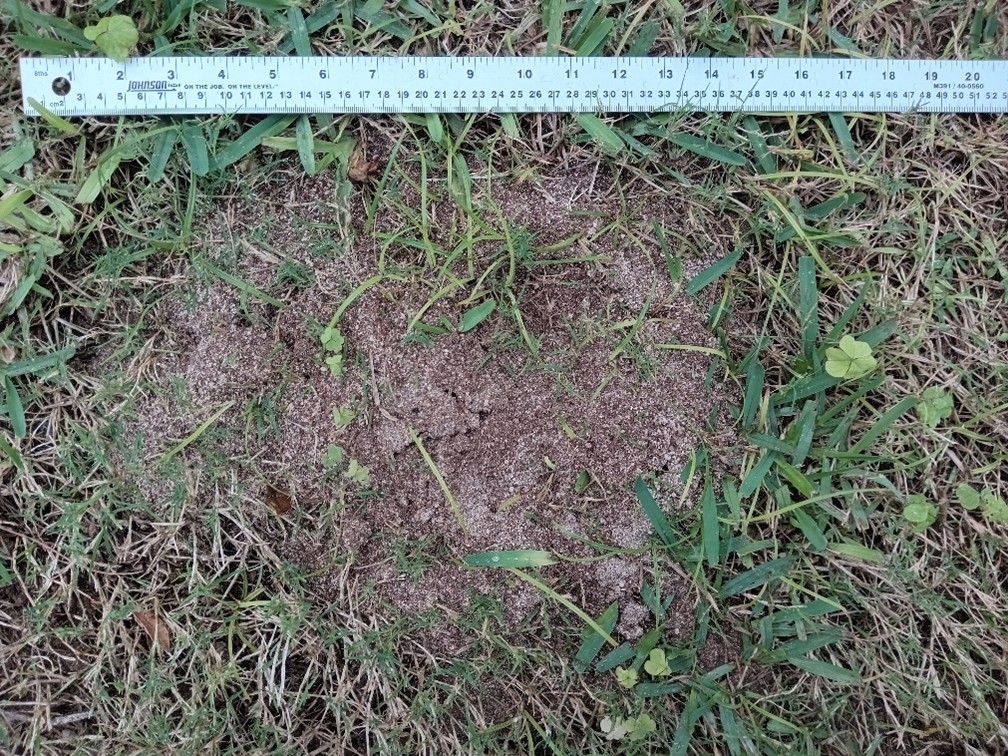
Red imported fire ants build underground nests in almost any type of soil, but prefer open, sunny areas such as pastures, parks, lawns, golf courses, pastures and cultivated fields. The shape and size of the nest depend on the type of soil the ants burrow into and the size of the ant colony. During the early part of colony development, the nests can look like loose soil scattered over grass. More mature colonies will form visible mounds composed of organic materials (e.g. soil, sand, tiny pieces of wood). Neither have obvious entry holes. Mounds can reach 18 inches in height, depending on the soil type. Ants nesting in sandy soils tend to create higher mounds than when in heavier soils containing clay.
Sting
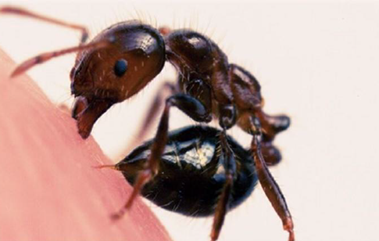
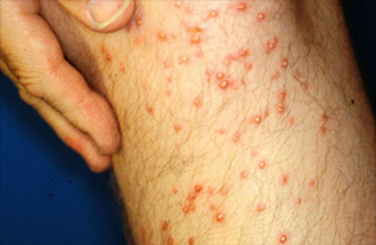
Fire ants are very aggressive when their nests are disturbed. They swarm and sting their victims when threatened. Fire ant stings can cause a burning sensation, leaving small red swellings on the skin which may form into blisters that will itch for several days. Fire ants have barbless stingers and will sting repeatedly whereas honeybees (a common stinging insect in Bermuda) will leave their dark barbed stinger in the skin. Anyone stung by an ant should contact fireants@gov.bm because this is an important indicator of fire ant presence.
Control Options
The best control programs use a combination of insecticides and physical methods that are effective, economical and least harmful to the environment.
Insecticides
Active ingredients* used to kill invasive ants can be found in non-residual insecticides, residual insecticides, toxicant baits, and insect growth regulators. Effectiveness depends on proper application, so using a licensed professional pest controller is preferred.
- Insect growth regulators (IGRs) are the most effective form of control and have been formulated to be attractive to foraging worker ants who collect them, take them back to the colony, and feed them to their queen. IGRs inhibit reproduction; when a queen cannot create offspring the entire ant colony eventually collapses. The most effective IGRs contain s-methoprene and pyriproxyfen as their active ingredients.
- Toxicant baits contain both an attracting agent (the bait) and a killing agent and typically contain hydramethelnon, indoxocarb, or fipronil. They can be found as either gels or granules. These products kill worker ants who are exposed to them but may not kill the queen who resides underground - and is the real target of eradication.
- Non-residual and residual contact insecticides only have a temporary effect. Both come in the form of sprays, powder, and granules and kill via direct contact which means they are unlikely to affect the queen. Insecticides in this category contain the active ingredient acephate, bifenthrin, or permethrin.
*It is important not to use just one product for continued control but rotate between different products as this will help prevent the ants from building up a resistance to a particular active ingredient and always follow the instructions for use on the product label.
Physical control
- Pour a few gallons of boiling water onto the mound and its surroundings. The queen’s chamber is typically found under the mound (as deep as 18 inches below the surface). Poking the center of the mound with a metal rod before pouring the water will help it penetrate deeper into colony. Repeat daily for 3 days. This method of control can be effective on small or newly formed ant colonies.
- Regular soil cultivation or repeatedly ploughing up the mound (and its surroundings) stresses the colony because the ants will spend more time repairing the damaged nest than foraging and growing in size. This is an option for farmers who find fire ants in and around agricultural fields. Decontamination of tools used for soil cultivation or ploughing the field must be done to prevent further spread.
- Sprinkle diatomaceous earth over ant mounds. This natural product is a fine powder and works by cutting the ant exoskeletons, causing them to dry out and die (however it will only affect those ants that walk through it).
- Proper sanitation of premises will help in eliminating food sources around fire ant colonies (e.g. ground trash, litter bins).
- Habitat modification, such as converting open sunny lawns into wooded areas or shaded gardens containing lots of fruit trees, shrubs and flowers. By doing this you will make the area less appealing for fire ants to colonize as well as increase species diversity and improve the ground temperature making unsuitable for fire ants to nest thereby reducing fire ant dominance and aggression.
Regular inspection of a mound is necessary to monitor the outcome of the treatment. Check 2–3 days after the first treatment, then weekly for one month. Check monthly thereafter for 3 months and 6 months and if there is no sign of activity, the colony can be considered eradicated. If the ants return during this period, re-treat and continue regular inspections.
For more detailed information about management advice please read the Texas imported fire ant management plan which can be viewed here.
Pathways of spreading
Fire ants can, by natural means, move relatively short distances around an area. This is usually accomplished via mating flights when large numbers of reproductive males and females fly into the air to breed. Such flights often occur after a rainy period whenever the temperature is between 75 and 91 °F, humidity is 80% or higher, and the wind is low. The newly mated queen lands (typically within 1 mile of her previous colony – although favourable winds can disperse her much farther), loses her wings, and excavates a nest to begin a new ant colony.
However, humans can move fire ants far greater distances (usually by accident) as they transport soil, sand, compost, potted plants, and horticultural waste from one location to another. Ants can also easily hitch rides on vehicles and machinery.
How you can help
If you work in landscaping or construction look before you leave:
- Inspect your work vehicles before beginning your trip to make sure fire ants aren’t on them.
- Park on pavement whenever possible to discourage fire ants from climbing onto your vehicles.
- Kill any ants in or around your truck with a commercially available insect spray labeled for use on ants.
Residents can help by monitoring the ants they have on their properties and immediately reporting any suspected fire ants. Places to keep under observation include lawns, beside footpaths and driveways, fence lines, garden beds, the borders of cultivated land, and around neighbourhood electrical sub-stations and plant nurseries.
IF YOU SEE THEM, REPORT THEM!
Additional resources
Additional free online training videos can be viewed here for anyone who wants to learn more about fire ants and how to manage them. The courses can be taken using either a computer or a mobile device.